Fard, Wajib & Sunnah of Umrah Explained: A Step-by-Step Guide
Umrah is a very special pilgrimage for Muslims. Unlike Hajj, which happens once a year, Umrah can be performed at any time of the year. It’s one of the mo…
admin
Umrah & Hajj Experts
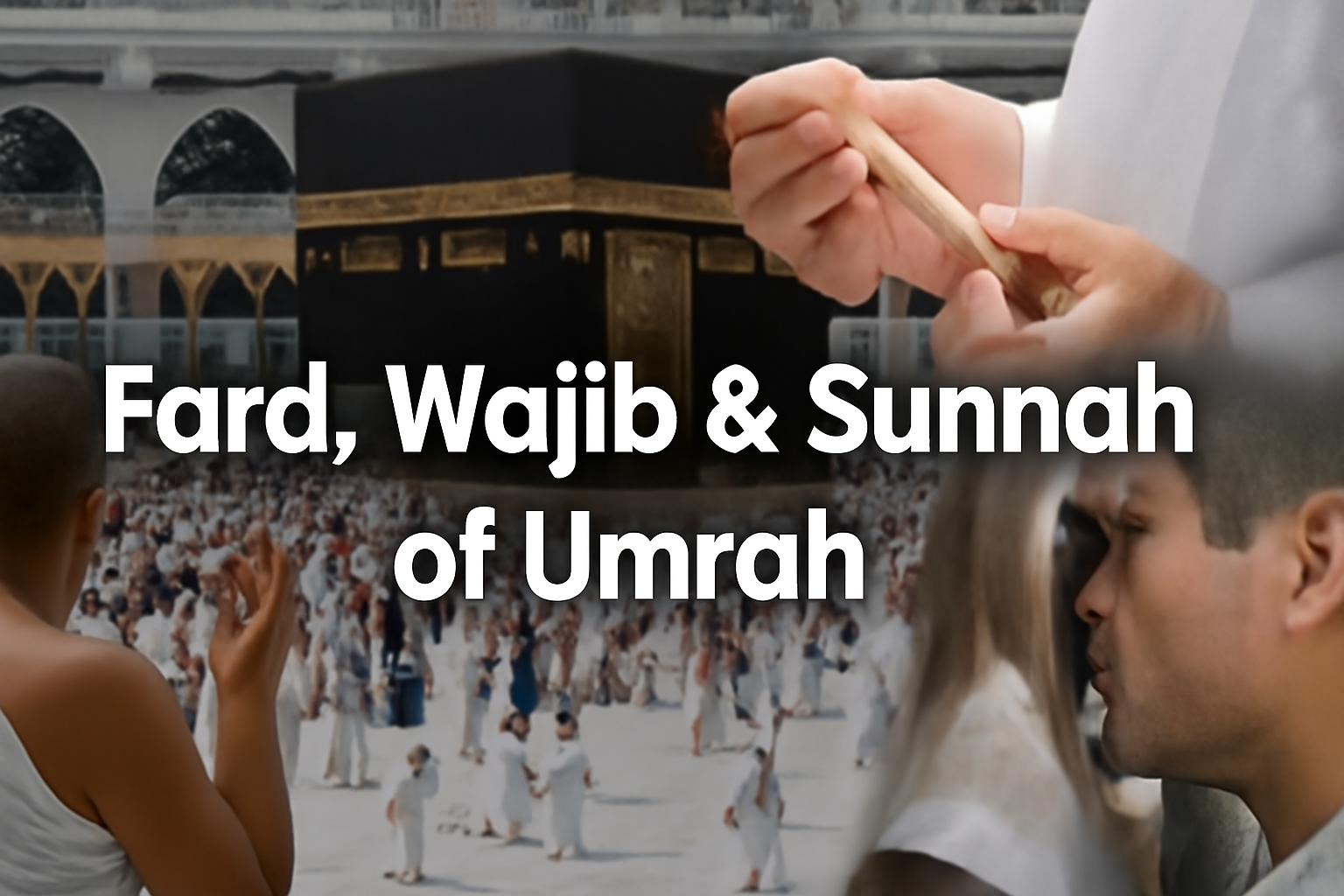
Umrah is a very special pilgrimage for Muslims. Unlike Hajj, which happens once a year, Umrah can be performed at any time of the year. It’s one of the most spiritually rewarding acts a Muslim can do. But, like any religious practice, there’s a way to do it correctly. In Umrah, certain actions are more important than others. Some actions are "Fard," meaning they are obligatory. Others are "Wajib," which means they are necessary. Then, there are actions called "Sunnah," and these are recommended.
In this article, we will go through each category Fard, Wajib, and Sunnah. I will explain them in a simple way. By the end, you’ll understand the importance of each action and why it matters when performing Umrah.
Definition of Umrah
Umrah is a religious trip to Mecca. Muslims visit the Kaaba, which is the holiest site in Islam.
It includes several rituals:
-
Walking around the Kaaba (Tawaf)
-
Walking between the hills of Safa and Marwah (Sa’i)
-
Cutting or shaving the hair (Tahallul)
Unlike Hajj, which has specific dates, Umrah can be performed at any time of the year.
The Difference Between Umrah and Hajj
Hajj and Umrah are both pilgrimages, but there are key differences:
-
Hajj happens at set times in the Islamic lunar calendar. It usually falls in the 12th month, Dhul-Hijjah. It’s a mandatory act for Muslims who are able to perform it at least once in a lifetime.
-
Umrah: Can be performed at any time during the year and is not compulsory. However, it holds great reward and significance for Muslims.
Fard, Wajib, and Sunnah of Umrah
Before diving into the details, let's first understand what each category means:
-
Fard: These actions are obligatory. You must perform them, and missing them will invalidate your Umrah.
-
Wajib: These actions are necessary, but they are not as important as Fard. If you miss a Wajib action, you can usually make up for it with a penalty or sacrifice.
-
Sunnah: These actions are recommended but not required. If you miss them, there is no penalty, but you will lose out on extra blessings.
The Fard (Obligatory) and Wajib Actions of Umrah
In Islam, Fard refers to something that must be done. If you don’t do a Fard action, your worship is considered incomplete. It’s like leaving out a key part of your homework. Your teacher won’t mark it as complete.
The Fard Actions of Umrah
Now, let’s look at the Fard actions in Umrah. These are the things you absolutely have to do for your Umrah to be valid.
Ihram
Ihram is the special state of purity that a Muslim enters before beginning Umrah. It involves wearing specific white clothes (for men) or modest clothing (for women). Ihram means making the intention to do Umrah. You do this at a special place called Miqat, before you enter Mecca.
Tawaf al-Qudum (First Tawaf)
Upon arriving in Mecca, the first thing you do is Tawaf al-Qudum. This involves walking around the Kaaba seven times in a counterclockwise direction. Each time you complete a circle, you make a Dua (supplication) to Allah. This act signifies your arrival and devotion.
Consequences of Not Fulfilling Fard Actions
If you miss any of these Fard actions, your Umrah will not be valid, and you will need to repeat it. So, it’s really important to follow these steps carefully and make sure you complete each one.
The Wajib (Necessary) Actions of Umrah
Wajib actions are necessary but slightly less important than Fard. You need to do them. If you miss a Wajib action, you can make up for it by offering a small penalty, like sacrificing an animal.
Sa’i Between Safa and Marwah
After Tawaf, the next step is Sa’i, which involves walking seven times between the hills of Safa and Marwah. This act is a reminder of Hajar’s search for water for her son, Prophet Ismail. Muslims perform Sa’i to honor her dedication and trust in Allah.
Shaving or Trimming the Hair (Tahallul)
After completing the Tawaf and Sa’i, you do Tahallul. This means men shave their heads, and women trim some hair. This symbolizes purification and renewal.
What Happens if Wajib Actions Are Missed?
If you forget a Wajib action, you don’t have to redo the whole pilgrimage. Instead, you’ll need to make a small sacrifice, like slaughtering an animal in Mecca. It’s not a big deal, but it’s always best to do everything as prescribed.
The Sunnah (Recommended) Actions of Umrah
Sunnah actions are the most flexible. They are highly recommended, and if you do them, you will receive extra rewards. However, if you miss them, there’s no penalty, and your Umrah remains valid.
The Sunnah Actions of Umrah
Here are some of the Sunnah actions that can enhance your Umrah experience.
Performing Additional Tawaf
Besides the required Tawaf, you should also do extra Tawafs while in Mecca. This act brings you closer to the Kaaba and increases your rewards.
Praying Two Rak’ahs at Maqam Ibrahim
After finishing the Tawaf, it’s Sunnah to pray two Rak’ahs near the Maqam Ibrahim. This is the spot where Prophet Ibrahim (Abraham) stood while building the Kaaba. This is a way of following in his footsteps.
Dua and Dhikr
While in Mecca, it's Sunnah to make extra supplications and remember Allah with Dhikr. These acts bring peace to the heart and help strengthen your connection with Allah.
Wearing Perfume and Using Miswaak
Wearing perfume and using a miswaak (a tooth-cleaning stick) are Sunnah. They help you stay clean and fresh during the pilgrimage.
Kissing or Pointing Towards the Black Stone (Hajar al-Aswad)
Whenever you approach the Kaaba, it’s Sunnah to kiss the Black Stone (Hajar al-Aswad) if you can. If you can’t, you can simply point towards it with your hand as a sign of respect.
Flexibility in Sunnah Actions
If you miss any of these Sunnah actions, don’t worry. Your Umrah is still valid, and you will still earn rewards. However, you lose out on the extra blessings that come with them.
Why Fulfilling Fard, Wajib, and Sunnah Actions Is Important
Doing the Fard actions makes sure your Umrah is valid. It shows you followed the right steps. Fulfilling Wajib and Sunnah actions, on the other hand, increases the reward and brings you closer to Allah.
The Consequences of Incomplete Umrah
Leaving out Fard actions makes your Umrah invalid. However, missing Wajib or Sunnah actions isn’t a big concern. You can always make up for missed Wajib actions and still get a lot of reward for doing Sunnah actions.
Practical Tips for Ensuring a Valid Umrah
To make sure your Umrah is valid:
-
Learn about the actions beforehand.
-
Ask for guidance from someone who has performed Umrah before.
-
Be mindful of your intentions (niyyah) during the pilgrimage.
-
Focus on sincerity and devotion to Allah.
Conclusion
In this article, we’ve covered the key actions you must take during Umrah:
-
Fard: These are the obligatory actions, without which Umrah is not valid.
-
Wajib: These are necessary actions, but you can make up for them if missed.
-
Sunnah: These are recommended actions that bring extra reward and blessings.
By understanding the Fard, Wajib, and Sunnah actions of Umrah, you’ll be able to approach the pilgrimage with confidence and spiritual mindfulness. Perform your Umrah with sincerity, and it will be a beautiful and rewarding experience for you.