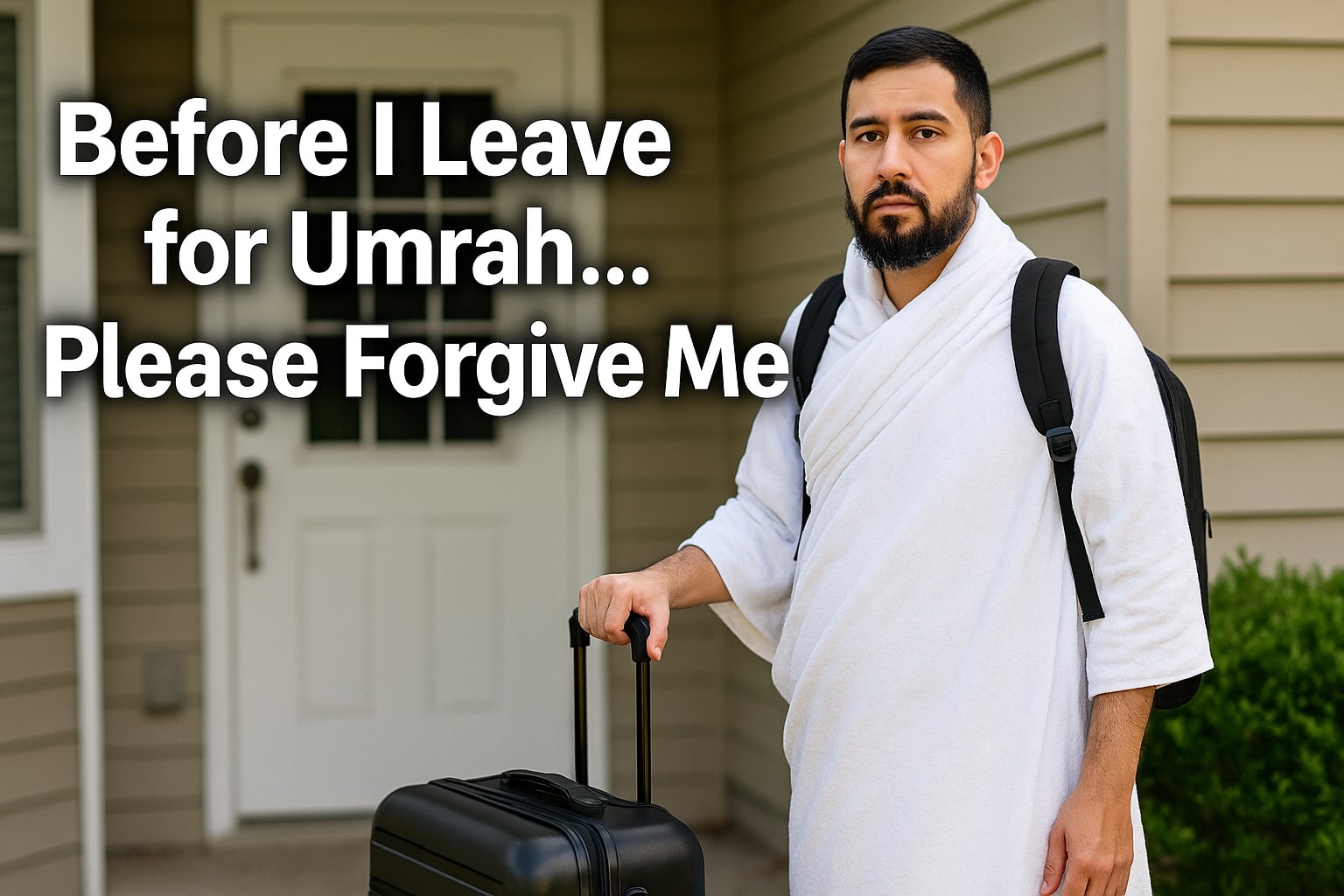
I am about to go on one of the most important journeys of my life: Umrah. As I prepare my heart and soul for this special trip, I want to say something from deep inside: please forgive me.
Maybe I have hurt you with my words. Maybe I did not listen when you needed me. Maybe I made mistakes without even knowing. Before I leave, I want to clear my heart. I want to make peace.
This message is for everyone I know. It comes from a place of love, respect, and hope. Umrah is not just a trip. It is a chance to get closer to Allah, to ask for His mercy, and to become a better person. And that journey starts by asking forgiveness from you.
Understanding the Spiritual Essence of Forgiveness Before Umrah
Before we start our journey to the holy land, we need to see why forgiveness is more than kind. It is spiritual and very powerful.
The Role of Repentance and Humility in Islam
In Islam, asking for forgiveness is not a sign of weakness. It is a sign of strength and humility. It shows that we understand we are human, and we make mistakes. But we also believe in healing, in changing, and in moving forward with a clean heart.
Hadiths and Quranic References on Forgiveness
The Prophet Muhammad (peace be upon him) said, "Whoever does not show mercy will not be shown mercy." (Sahih al-Bukhari). Allah also says in the Quran, "And let them pardon and overlook. Would you not like that Allah should forgive you?" (Surah An-Nur 24:22). These words remind us how important it is to forgive others if we want Allah to forgive us.
Cleansing the Heart Before a Sacred Journey
Before going to Umrah, we try to clean our hearts. We leave behind anger, pride, and grudges. We carry only love, hope, and prayers. Asking others to forgive us is like washing our hearts with kindness. It makes our journey pure and light.
Islamic Etiquette: Seeking Forgiveness from Others
Islam teaches us to act kindly when we seek peace with others. This is especially true before important events, such as Umrah.
Making Peace Before Traveling
The Prophet (PBUH) taught us to say goodbye with good words. He would make peace with people before traveling. This way, we carry no bad feelings, and our hearts are calm.
Obligations Toward Others' Rights (Huquq al-Ibad)
Islam teaches us to respect the rights of others. If we have hurt someone or taken something from them, we must make it right. Forgiveness is not just between us and Allah. It also involves people around us.
The Prophet’s Example of Asking Forgiveness
Even though the Prophet was free from sin, he still asked Allah for forgiveness often. He also treated people with kindness and care. His life is a lesson in humility and compassion.
When and Whom to Send the Forgiveness Message To
Not sure who to ask forgiveness from? Here's a simple guide to help you reflect on your relationships and reach out with a sincere heart.
Close Family Members (Parents, Siblings, Spouse)
Start with the people closest to your heart. Tell your parents how much they mean to you. Ask your siblings and spouse to forgive you for any hurt. These are the people who see the best and worst of us. Their prayers matter.
Friends and Relatives
Reach out to your friends and extended family. Maybe you’ve lost touch. Maybe there was a fight. Now is the time to reconnect. A simple message can heal years of silence.
Colleagues and Community Members
If you’ve had misunderstandings at work or in your community, don’t wait. Clear the air. A short, kind message can bring peace.
General Public (Social Media Posts or Broadcast Messages)
You can also post a general message on WhatsApp, Facebook, or Instagram. This way, you can reach many people at once. Keep it simple, honest, and from the heart.
How to Write a Heartfelt ‘Please Forgive Me’ Message
Sending a forgiveness message can be tough. But with a gentle tone and kindness, your words can heal more than you realize.
Choosing the Right Words and Tone
Use soft and simple words. Speak like you’re talking to a friend. Be honest about your feelings.
Expressing Sincerity and Intent
Say that you truly want their forgiveness. Tell them why you’re asking. Share your feelings. Let them know this is important to you.
Mentioning Specific Wrongs if Appropriate
If you remember something specific you did wrong, mention it. It shows that you care and that you’re not just saying sorry without meaning it.
Asking for Prayers (Dua) and Offering Yours in Return
Tell people you will make dua for them during Umrah. Ask them to make dua for you too. This brings hearts closer.
Sample Messages for Different Audiences
Here are some examples you can use or change for your forgiveness message if you're not sure where to begin.
Short and General Forgiveness Messages
"Dear friends and family, I am going for Umrah soon. Please forgive me for any wrong I have done to you. I will pray for all of you."
Emotional and Personal Messages
"Mom, I know I have not always been the best child. I’ve made mistakes. But I love you deeply. Before I go for Umrah, please forgive me. I want to carry your prayers with me."
Formal Messages for Workplace or Public Sharing
"As I prepare for Umrah, I wish to ask all my colleagues and acquaintances to forgive me if I have ever hurt or upset you. I am grateful for your kindness and understanding."
Social Media Caption Examples (Instagram, WhatsApp, Facebook)
"Heading to Umrah soon. If I’ve ever hurt you knowingly or unknowingly, please forgive me. I’ll be praying for you in Makkah and Madinah."
Cultural and Emotional Significance
Forgiveness goes beyond words. It draws hearts closer, heals old wounds, and adds meaning to your spiritual journey.
Healing Broken Relationships
Sometimes a simple message of forgiveness can fix a broken bond. It can bring back lost love and trust. Don’t miss the chance.
Earning Rewards Through Reconciliation
Forgiving others and asking for forgiveness brings big rewards from Allah. It makes our hearts lighter and brings barakah (blessings) in life.
Building Unity and Brotherhood
When we ask for forgiveness, we build stronger ties. We create unity. We become a better ummah, full of love and care.
Including Dua (Supplication) in the Message
A beautiful way to connect with others before Umrah is to include sincere duas, both for them and from them.
Praying for Others at the Holy Sites
Tell people you will pray for them in front of the Kaaba. This small promise means a lot. It brings tears and joy to hearts.
Sharing Prophetic Duas for Forgiveness and Mercy
Add a simple dua in your message: “May Allah forgive us all and guide us to the straight path.” It shows your love for the ummah.
Encouraging Others to Make Dua for You
Ask others to pray for your safe journey, for your Umrah to be accepted, and for your heart to return pure and strong.
What to Do If You Don’t Receive Forgiveness
Sometimes people don’t respond the way we hope. Here’s how to stay at peace and leave the matter in Allah’s hands.
Making Personal Dua and Tawbah (Repentance)
If someone doesn’t forgive you, don’t lose hope. Make dua. Ask Allah to soften their heart. Keep trying to do better.
Understanding Intent and Accountability
Allah knows your intention. If you truly tried, He sees that. Leave the rest to Him. Focus on your own actions.
Leaving the Outcome to Allah’s Wisdom
Sometimes healing takes time. Trust Allah’s plan. He knows what’s best for every heart.
Conclusion
As I get ready to step into the holy land, my heart is full. Full of hope, love, and the desire to be a better person. I want to come back from Umrah with a clean heart, a peaceful soul, and stronger ties with all of you.
If I have ever made you feel sad or upset, please forgive me. Your forgiveness is a gift I will treasure. I promise to remember you in my duas.
Let’s all try to live with kind hearts. Let’s forgive more, love more, and pray for each other. May Allah accept our efforts and bring peace to all our hearts. Ameen.



 0203 062 8925
 +44208 145 1117
 Beat My Price


