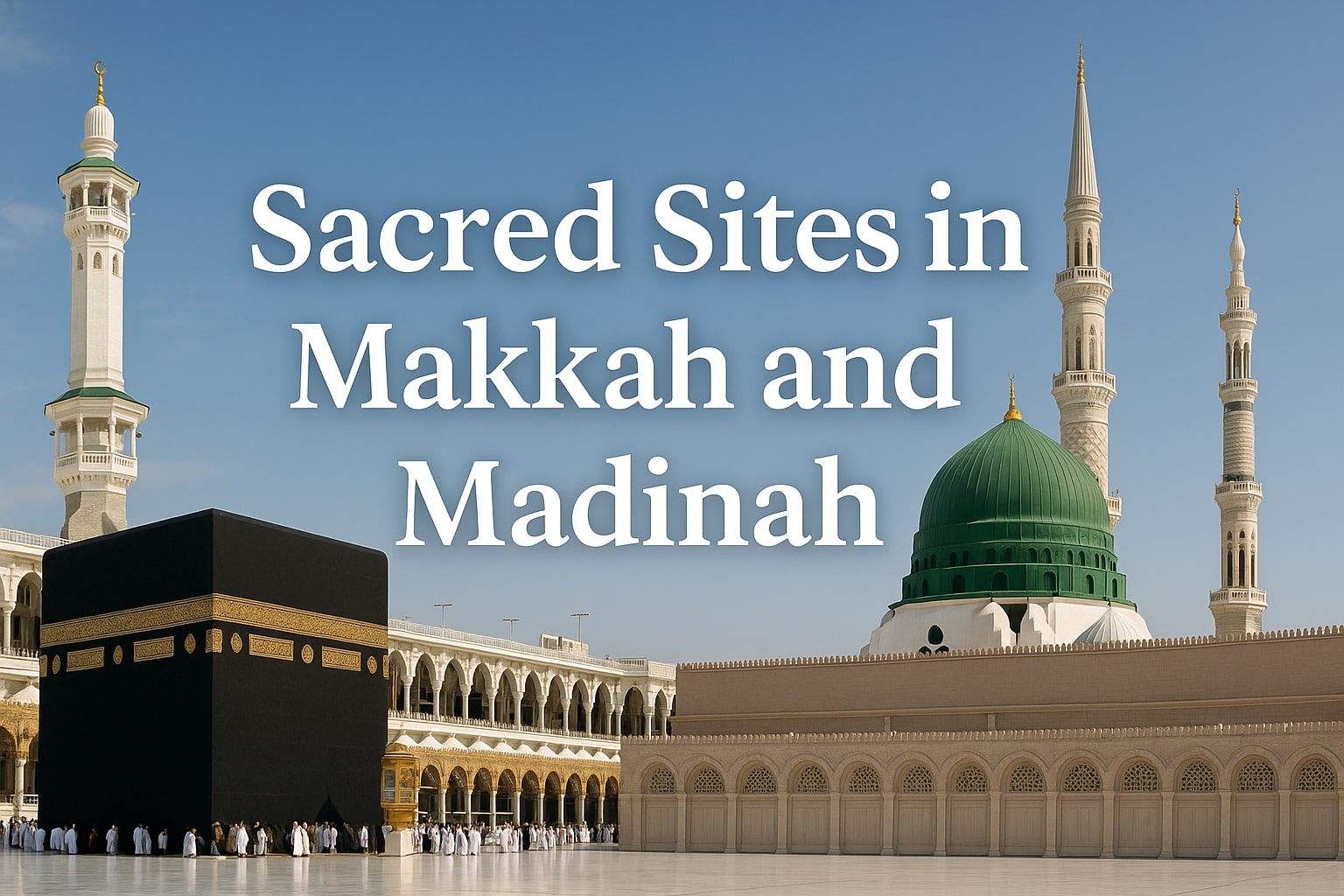
Makkah and Madinah are two of the most special places for Muslims around the world. They are not just cities, they are full of history, faith, and deep meaning. Millions of people visit them every year to pray, reflect, and feel closer to God. In this article, we will explore the main holy places in these cities. We want to help you learn about their history. You'll discover why they matter and how they connect to the stories of prophets and early Muslims.
We aim to inform, teach, and engage you, making it feel like a caring guide. We promise to keep things clear and based on trusted sources, so you know you can trust this info.
Sacred Sites in Makkah
Makkah has some of the holiest sites in Islam. Millions of Muslims come here every year to worship and reflect.
Masjid al‑Haram (The Sacred Mosque)
When we say "Masjid al‑Haram," we mean the holy mosque that surrounds the Kaaba. It's the biggest mosque in the world and the most sacred place in Islam.
The Kaaba: The House of Allah
At the heart of the mosque is the Kaaba. It is a cube-shaped building covered with a black cloth. Muslims pray facing it from all over the world. Prophet Ibrahim (Abraham) and his son Ismail (Ishmael) built it long ago. When Prophet Muhammad returned to Makkah, he repaired it.
The Black Stone (Al‑Hajar al‑Aswad)
Set into one corner of the Kaaba is the Black Stone. Pilgrims try to touch or kiss it during tawaf, the walk around the Kaaba. Some people believe it's from heaven, and it is held in a silver frame now.
Maqam Ibrahim
Near the Kaaba is a stone called Maqam Ibrahim. It has the footprints of Prophet Ibrahim, left there when he helped build the Kaaba. It's kept safe in a glass case now. Pilgrims often pray behind it after tawaf.
The Well of Zamzam
Just east of the Kaaba is the well of Zamzam. It sprang up when Hajar (Hagar) was desperate for water for her baby, Ismail. She ran between two hills, and God gave her water. It never dried up. Today, people drink Zamzam water because it is believed to be blessed and good for them.
Safa and Marwa
Inside the mosque, there are two small hills, Safa and Marwa. Pilgrims walk back and forth between them seven times. This is called Sa’i and it remembers Hajar’s search for water before Zamzam appeared.
Mataf and Hijr Ismail
The area right around the Kaaba is called the Mataf. It is where pilgrims walk during tawaf. Next to the Kaaba is a semi-circle called Hijr Ismail or the Hateem. It is believed to be part of the original Kaaba. Praying inside it is special, though not everyone can go in.
Other Landmarks
There’s the Meezab-ur-Rahmah, a spout on top of the Kaaba roof that drains rainwater, seen as a symbol of mercy. Inside the mosque, you’ll see Bab ar-Rahmah (the Gate of Mercy). The marble floors shine, and the lights are stunning.
Mount Safa and Mount Marwah
These hills are now inside the mosque. Pilgrims do Sa’i, seven journeys between them. This honors Hajar’s walk for her child. Together, Sa’i is about 3.15 kilometers long.
Mina, Arafat, and Muzdalifah
These places are outside the city and are part of the Hajj pilgrimage.
-
Mina is where pilgrims toss pebbles at stone walls. They do this to remember Prophet Ibrahim's struggle with temptation.
-
Arafat is the spot where Prophet Muhammad gave his last sermon. It is the most important part of Hajj.
-
Muzdalifah is where pilgrims rest and collect small stones.
These sites are central to the Hajj rites.
Jabal al‑Noor (Mountain of Light)
This mountain is near Makkah. Up high is the Cave of Hira. Prophet Muhammad went here to pray and reflect. It is where he received the first words of the Quran from Angel Gabriel. It is a hard climb, about 1,750 steps, but the place is peaceful and sacred.
Jabal Thawr
Another mountain near Makkah, it has the Cave of Thawr. During the Hijrah (migration to Madinah), Prophet Muhammad and Abu Bakr hid here to escape enemies. It reminds people of courage and trusting God.
Al‑Abtah Valley
Between Makkah and Mina is a valley called Al‑Abtah (or Al‑Muhassab). Prophet Muhammad stopped here during his farewell Hajj. He prayed at each prayer time and took rest. Today, many pilgrims follow this sunnah (practice).
Sacred Sites in Madinah
Madinah is the city of Prophet Muhammad. It is home to peaceful and holy sites that hold great significance for Muslims worldwide.
Al‑Masjid an‑Nabawi (The Prophet’s Mosque)
This is the second holiest mosque in Islam. It was built by Prophet Muhammad when he arrived in Madinah. It has grown many times since then.
The Green Dome: The Prophet’s Tomb
Visiting here feels close and comforting to many Muslims.
Riyad‑ul‑Jannah
This spot inside the mosque is called the “Garden of Paradise.” It is believed that a part of it is in Heaven. People treat it with deep respect.
Minbar and Mihrab of the Prophet
The Prophet had a pulpit (minbar) from where he gave sermons. The mihrab (prayer niche) showed prayer direction. Both are preserved within the mosque.
Quba Mosque
This is the first mosque ever built in Islam. The Prophet Muhammad built it in Madinah. Praying here is said to bring great rewards, even more than regular prayers in other places.
Masjid al‑Qiblatain (Mosque of Two Qiblas)
This mosque is where the qibla changed. It used to face Jerusalem, but now it faces Makkah. The mosque still has markings of both mihrabs.
Jannat al‑Baqi (Garden of Baqi)
This is the cemetery next to the Prophet’s Mosque. Many family members of Prophet Muhammad and his close friends are buried here. Muslims walk by to say prayers and show respect.
Uhud Mountain
The Battle of Uhud. The graves of the Muslim martyrs, including Hamza ibn Abdul‑Muttalib, are on the hill. Pilgrims visit it to remember their sacrifice and blessing.
Role of Sacred Sites in Worship and Pilgrimage
For Muslims:
Both involve visiting these sites to remember history and follow the Prophet’s footsteps.
Ziyarah (Visitation)
Visiting holy sites like Prophet Muhammad’s mosque or the graves of his companions is called ziyarah. It is a way to show love and respect, asking God to bless them.
Etiquettes and Conduct
-
Dress neat and modest.
-
Keep calm and patient, lots of people visit these places.
-
Be kind, helpful, and clean, help others find their way or give a friendly smile.
-
Always remember prayer, good behavior, and focusing on why you came here.
Historical Preservation and Modern Comfort
Saudi Arabia takes care of these holy places carefully:
-
They clean and fix walls and floors.
-
They add modern safety like sprinklers and cameras.
-
They plan carefully so old sites are not harmed while helping pilgrims.
Facilities for Pilgrims
In Makkah and Madinah, there are lots of facilities:
-
Big mosques with many prayer halls.
-
Water stations giving Zamzam.
-
Wheelchairs and paths for people who need extra help.
-
Roads, trains, buses, and clear signs so people can move easily.
Digital Help and Guided Visits
You can use apps and audio guides when you visit. They help you know what to do in each place and tell stories and meanings.
Conclusion
Makkah and Madinah are more than just places. They are full of memories, faith, and hope. From the Kaaba in Makkah to the Prophet’s Mosque in Madinah, every stone tells a story. People gather in millions to feel God’s mercy, remember prophets, and live an experience of unity and love.



 0203 062 8925
 +44208 145 1117
 Beat My Price


